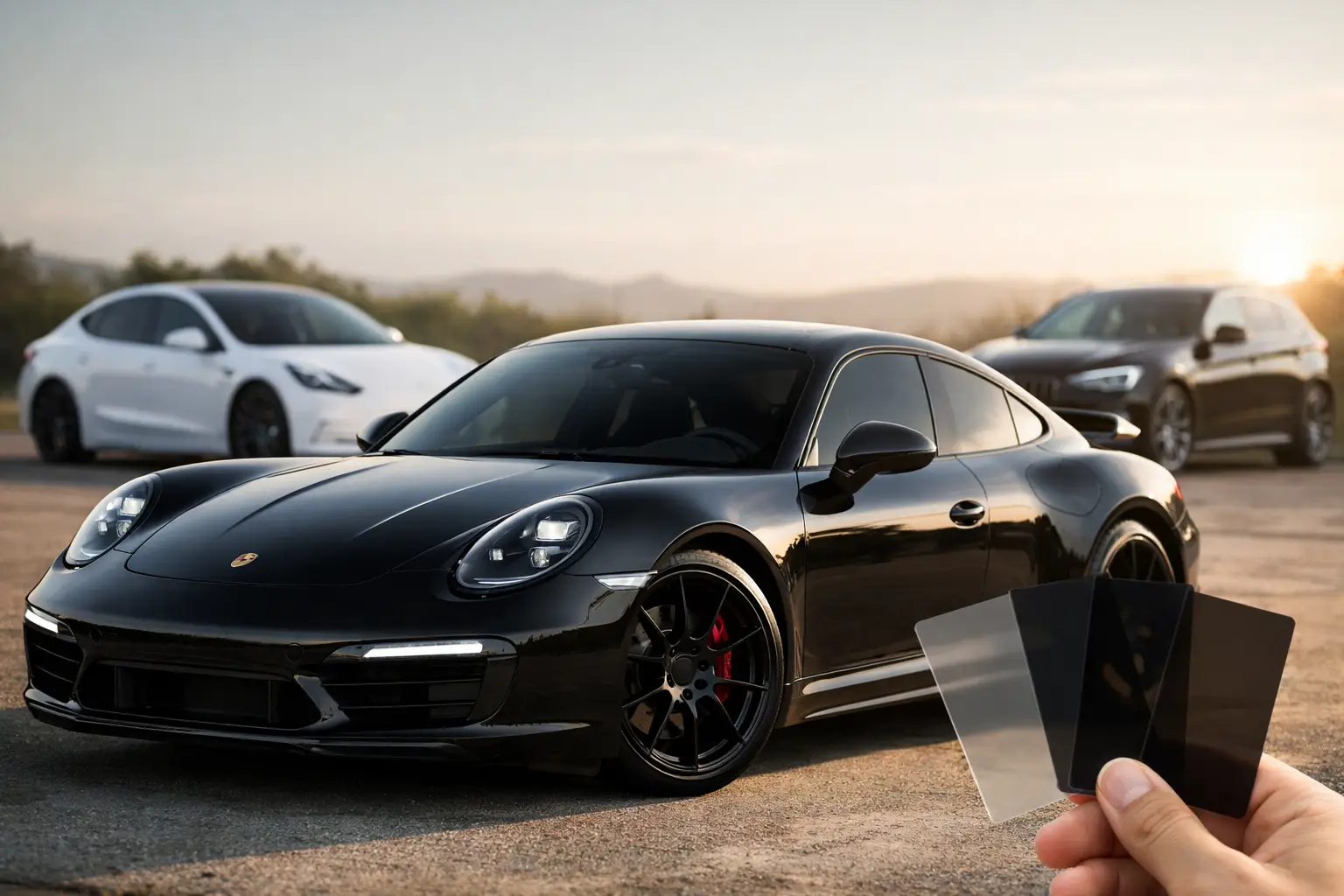
A tint shade can make a black luxury SUV look sharper, keep a commuter car more comfortable in an Oklahoma summer, or create a visibility problem after dark. That is why a window tint percentage guide should start with more than appearance. The right choice balances the look you want with daytime heat rejection, privacy, safe visibility, and the tint rules that apply to your vehicle.
Tint percentage is one of the first decisions in a professional installation, but it is not the only one. Film quality, glass type, and where the film is installed all affect the finished result. A careful consultation helps ensure your vehicle looks refined on the road and remains practical every time you drive it.
What Window Tint Percentage Actually Means
Window tint percentage refers to visible light transmission, often called VLT. It is the amount of visible light that can pass through the glass after tint is applied. A higher number means more light comes through and the window appears lighter. A lower number means less light comes through and the window appears darker.
For example, 50% tint allows about half of visible light through the window. It provides a subtle shaded look while maintaining excellent visibility. A 20% tint allows only about one-fifth of visible light through, creating a noticeably darker appearance with more privacy. At 5%, often called limo tint, the glass looks very dark and visibility can be limited in low-light conditions.
The number describes visible light, not total heat rejection. Two films with the same VLT can perform very differently against infrared heat and UV exposure. Premium ceramic films can reject significant heat without requiring the darkest possible shade, which matters for drivers who want comfort without compromising their view of the road.
Window Tint Percentage Guide by Shade
The best tint percentage depends on how you use the vehicle, where you park it, and how comfortable you are driving at night. These are common shade ranges and the practical results they deliver.
| Tint percentage | Typical appearance | Best fit | | — | — | — | | 70% | Nearly clear, light heat reduction | Windshields where permitted or drivers who want minimal visual change | | 50% | Light, refined shade | Daily drivers and owners prioritizing night visibility | | 35% | Medium shade with a factory-plus look | A balanced option for many sedans, trucks, and SUVs | | 25%-20% | Darker, more private appearance | Drivers seeking stronger style, glare reduction, and privacy | | 15%-5% | Very dark to limo-dark | Rear glass applications where legal and practical visibility allows |
50% tint: subtle protection without a dark look
A 50% film is a smart choice for owners who want to reduce glare and UV exposure while keeping the cabin bright. It is especially useful for drivers who travel frequently at night, use poorly lit garages, or simply prefer an understated finish. On many vehicles, it looks clean rather than obviously tinted.
Because shade alone does not determine performance, a high-quality ceramic 50% film can provide impressive comfort during hot Oklahoma afternoons. This is a strong option for a new vehicle owner who wants protection and polish without changing the factory appearance dramatically.
35% tint: the balanced everyday choice
For many drivers, 35% sits in the sweet spot. It gives a vehicle more definition, reduces glare, and offers a meaningful increase in privacy without becoming excessively dark. It also generally maintains better nighttime visibility than deeper shades.
A 35% shade works well on everything from a family SUV to a performance sedan. If you want a noticeable improvement in appearance but do not want the windows to look blacked out, this is often the percentage worth considering first.
25% and 20% tint: darker style and privacy
A 25% or 20% tint creates a more aggressive, customized look. It can make bright interiors less visible from outside and is useful for drivers who spend long periods in direct sun. The cabin may feel more private, while quality film also helps reduce the fading and wear that UV exposure causes to leather, plastics, and trim.
The trade-off is reduced visibility in rain, parking lots, and unlit roads after dark. This does not make these shades wrong, but it does make vehicle use important. A driver who commutes on well-lit city streets may have a different experience than someone who regularly drives rural Oklahoma roads at night.
15% and 5% tint: use extra care
Very dark tint makes a statement, particularly on rear windows. It offers strong privacy and can complement certain vehicle styles, but it requires honest consideration of visibility and legal requirements. Backing out of a dark driveway or checking for pedestrians in low light becomes more difficult when the glass is heavily shaded.
For some vehicles, a lighter front-side tint paired with a darker rear glass delivers a better everyday result. It preserves a cohesive appearance while giving the driver a clearer view where it matters most.
Factory Privacy Glass Changes the Calculation
Many trucks, SUVs, and vans leave the factory with dark-looking rear glass. This is usually privacy glass, not aftermarket window film. It may darken the view into the cabin, but it does not always provide the same UV, infrared, or heat-rejection benefits as premium tint film.
It also changes the final VLT when film is added. A 35% film applied over factory privacy glass will not result in a 35% finished window. The combined layers can create a substantially darker result. Measuring the existing glass before recommending film helps avoid an outcome that is darker than expected or unsuitable for your driving needs.
This is one reason professional installation is about more than selecting a number from a display. The installer should account for the glass already on your vehicle, the desired final appearance, and the performance you expect from the film.
Oklahoma Tint Laws and Practical Choices
Tint laws can specify different requirements for the windshield, front side windows, rear side windows, and rear glass. They may also address reflectivity, mirrors, and medical exemptions. Since rules can change and vehicle configurations vary, confirm current Oklahoma requirements before choosing your shade.
For Edmond and Oklahoma City drivers, legal compliance is not just about avoiding an inconvenience during a traffic stop. It protects your investment in the installation. Choosing a film that suits both the law and your real driving conditions means you can enjoy the finished vehicle with more confidence.
A professional shop should be direct about what is allowed, what is commonly requested, and where a customer’s preferences may conflict with regulations or safe visibility. That kind of guidance is more valuable than simply installing the darkest film possible.
Heat Rejection Is Not the Same as Darkness
One of the most common misconceptions about window tint is that darker always means cooler. Darker film can reduce more visible light, but its heat performance depends heavily on the film technology. Dyed films, metallic films, and ceramic films can all look similar at a given shade while delivering different levels of infrared rejection, UV protection, clarity, and signal compatibility.
Ceramic window film is often the premium choice for drivers who want excellent heat reduction without a heavy tint appearance. It can help keep the cabin more comfortable, reduce air-conditioning strain, and protect interior surfaces from sun exposure. It is also a strong consideration for vehicles with electronics that can be affected by some metallic films.
For a daily driver, a lighter ceramic film may be more useful than a darker, lower-performing film. For an enthusiast vehicle that is frequently parked outdoors, combining the right shade with high-quality heat rejection can make every drive more comfortable while helping preserve the interior.
Choose Tint for How You Actually Drive
Before settling on a percentage, think about your routine. If you drive after dark, pick up children from school, park in covered garages, or navigate rural roads, visibility deserves extra weight in the decision. If your vehicle sits in direct sun during the workday, heat rejection and UV protection may matter more than going darker.
Also consider the color of the interior and exterior. Light interiors benefit from tint because they show less sun-related wear over time, while dark vehicles can look especially clean with a medium-to-dark shade. There is no single best percentage for every vehicle. The best choice is the one that fits your style, your local requirements, and your everyday driving conditions.
At Superior Concepts, professional tinting is approached as a lasting upgrade, not a quick cosmetic add-on. Premium material, precise installation, and a thoughtful shade recommendation help protect the vehicle while delivering the polished finish owners expect.
Your window tint should make every mile more comfortable, not create a compromise you notice after sunset. Choose a shade you will appreciate in the heat, in the rain, and during the drive home at night.