A freshly painted hood can collect its first rock chip on the drive home from the dealership. For drivers in Edmond and across the OKC Metro, gravel, highway debris, bugs, harsh sun, and everyday parking lots all put a vehicle’s finish to work. So, how does paint protection film work? It creates a clear, durable barrier over the painted surfaces most likely to take that damage, helping preserve the finish underneath.
Paint protection film, often called PPF or clear bra, is not simply a clear sticker applied to a car. Quality film is a carefully engineered urethane material installed with precise surface preparation, tailored patterns, and trained hands. When it is selected and installed correctly, it gives a vehicle practical protection without changing the paint color or taking away from a factory or custom finish.
How Does Paint Protection Film Work?
PPF works by absorbing and dispersing the energy from minor impacts before they reach the paint. A pebble kicked up by a truck tire may hit the film hard enough to leave a mark on an unprotected bumper. With PPF in place, the film takes the impact instead. Its flexible urethane construction helps resist punctures, abrasions, and surface scuffs that could otherwise chip, crack, or scratch the clear coat.
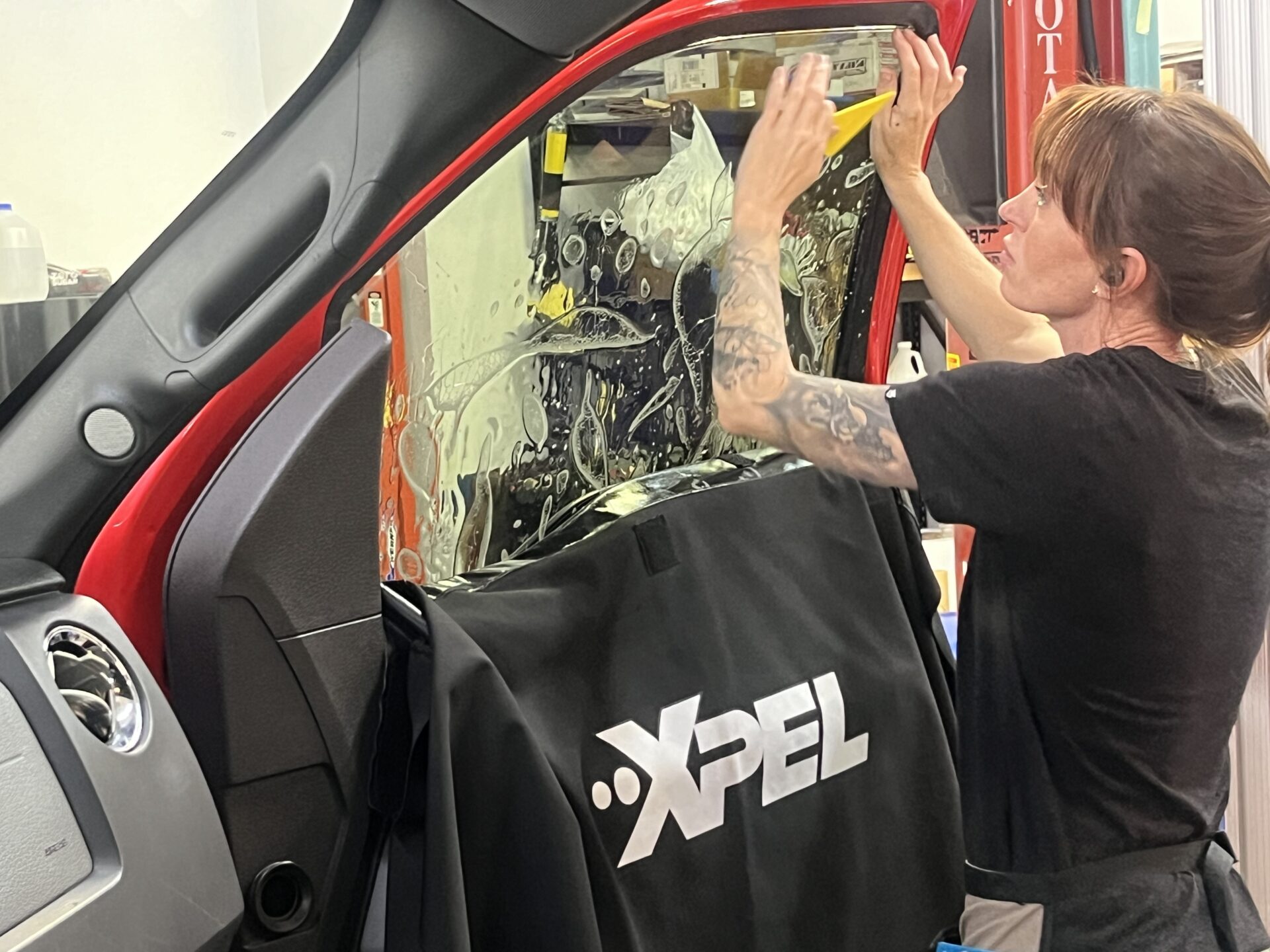
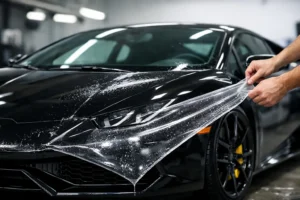
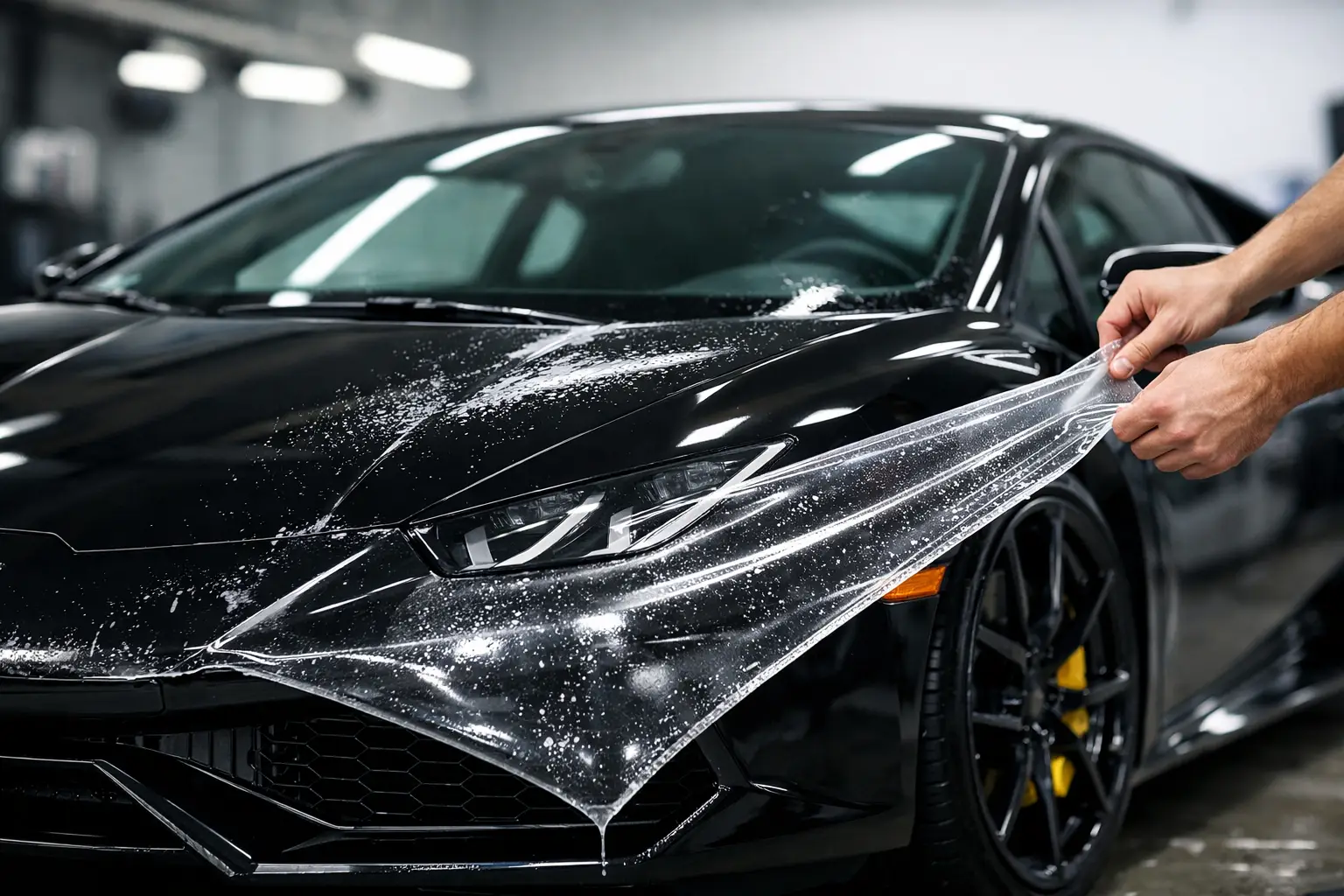
The film is optically clear, so it allows the color, metallic flake, and gloss of the paint to remain visible. It is bonded to the painted panel with a clear adhesive designed for automotive surfaces. A professional installer uses a slip solution to position the film, then carefully removes moisture and air so the material lays flat and adheres correctly along panels, curves, and edges.
Our lin of Xpel films also include a self healing clear topcoat. This top layer adds resistance to staining and environmental contaminants while giving many PPF products their self-healing capability. That combination is why the material can protect more effectively than a wax or sealant alone. Those products can improve shine and offer some chemical resistance, but they do not provide a meaningful physical shield against road debris.
The Self-Healing Layer Explained
Light scratches and swirl marks do not always mean the paint has been damaged. Often, they affect only the film’s topcoat. On self-healing PPF, warmth from sunlight, hot water, or controlled heat can help the top layer flow back into a smooth appearance. Fine wash-induced marks may become far less noticeable or disappear altogether.
This feature has limits. Self-healing is intended for light surface marring, not deep cuts through the film, severe impact damage, or a gouge that reaches the paint below. If the film takes a major hit, it may need to be replaced on that panel or section. The key advantage is that the sacrifice happens to the removable film instead of the vehicle’s original finish.
That distinction matters for owners who plan to keep a vehicle for years, as well as those who want to protect resale value. Original paint in excellent condition is a meaningful asset. PPF helps retain that condition in the places where normal driving creates the most wear.
What Paint Protection Film Protects Against
The most obvious benefit is chip resistance. Front bumpers, hoods, fenders, mirrors, rocker panels, and lower doors regularly face sand, loose gravel, road salt, and other debris. PPF creates a protective layer that reduces the chance of those impacts becoming permanent paint damage.
It also helps with the smaller frustrations that add up over time: scuffs near door edges, scratches around trunk loading areas, marks behind door handles, and abrasion on high-contact painted surfaces. On trucks and SUVs, the lower body and rear wheel arch areas can be especially vulnerable. On performance vehicles, the low front end can take a surprising amount of abuse during normal highway driving.
PPF can also provide resistance to stains from bug splatter, bird droppings, tree sap, and road grime. These contaminants should still be removed promptly. Film is not a reason to leave acidic or corrosive material sitting on the vehicle. However, the topcoat adds another layer between those contaminants and the clear coat, making routine cleanup easier and reducing the risk of lasting marks.
UV exposure is another consideration in Oklahoma. Premium film helps protect covered surfaces from the sun’s damaging rays, which can contribute to fading and oxidation over time. It cannot change the condition of paint that is already failing, and it cannot protect panels that are not covered, but it can support long-term finish preservation on a well-maintained vehicle.
Where Should PPF Be Installed?
The right coverage depends on how and where the vehicle is driven. A daily commuter that spends plenty of time on I-35 or the Kilpatrick Turnpike may benefit from front-end protection. As debris is accumulated along the center divider, Semi Trucks and other vehicles driving buy create a vortex that sping that debris into the air and ultimately into your vehicle. A weekend sports car may need coverage on its low bumper, full hood, front fenders, mirrors, and rocker panels. A family SUV may be better served by focusing on the bumper, door cups, door edges, and cargo-area protection.
A partial front package typically covers the most exposed leading areas, while a full front package extends protection across the bumper, full hood, full fenders, and mirrors. Full-body PPF is a strong option for owners of high-value, matte-finish, exotic, or freshly customized vehicles who want broad protection and a consistent finish across every painted panel. Our most popular package when not doing full vehicle coverage is a “track pack“. This is our full front coverage combined with our rocker panel kit, and roof a-pillar kit.
There is no one-size-fits-all answer. More coverage provides more protection, but it also requires a larger investment. An honest consultation should consider the vehicle, paint condition, driving habits, parking environment, and ownership plans rather than pushing coverage that does not fit the customer’s needs. At Superior Concepts, you will never receive a high pressure sales pitch. We understand the substantial investment you are making and always treat our customers the way we would want to be treated.
Why Professional Installation Matters
PPF is only as good as its installation. The process starts with a detailed inspection and wash, followed by paint decontamination and, when appropriate, paint correction. Installing film over embedded contamination, existing scratches, or poorly prepared surfaces can affect the appearance and adhesion of the finished job.
From there, installers use vehicle-specific patterns or carefully controlled custom work to fit each panel. Proper alignment matters. So do clean edges, accurate trimming, tension control around complex curves, and complete moisture removal. A rushed installation can lead to visible seams, lifted edges, trapped debris, stretching marks, or premature failure.
The condition of the vehicle matters, too. PPF can preserve good paint, but it does not repair peeling clear coat, deep chips, rust, or previous bodywork problems. Those issues should be addressed before installation whenever possible. On a new vehicle, applying film early is often the best way to protect the finish before daily driving starts.
At Superior Concepts, the goal is not to cover a vehicle quickly. It is to install premium protection with the attention to detail that valuable vehicles deserve, then stand behind the workmanship with confidence.
PPF, Ceramic Coating, and Wax Are Not the Same
These services can complement each other, but they do different jobs. Paint protection film is primarily a physical barrier against rock chips, abrasions, and minor impact damage. Ceramic coating is primarily a surface protection product that enhances gloss, water behavior, and resistance to contaminants. Wax offers a short-term boost in shine and water beading but needs regular reapplication.
A ceramic coating can be applied over PPF to make washing easier and enhance the film’s appearance. It does not replace PPF’s impact protection. Likewise, PPF does not make a vehicle maintenance-free. Regular washing, safe drying methods, and prompt removal of contaminants are still necessary to keep the film and the vehicle looking their best.
How Long Does Paint Protection Film Last?
High-quality PPF can provide years of protection when it is professionally installed and properly maintained. Actual lifespan depends on the film itself, sun exposure, driving conditions, wash habits, and whether the vehicle is stored indoors or outdoors. Premium products and a strong warranty provide peace of mind, but maintenance still plays a role.
Wash the vehicle with pH-balanced automotive products, avoid abrasive brushes, and use clean microfiber towels. Automated car washes with harsh brushes can create unnecessary wear on both paint and film. If an edge ever begins to lift or a panel suffers major damage, have it inspected rather than trying to trim, glue, or repair it at home.
For owners who care about keeping their vehicle sharp through Oklahoma miles, paint protection film is one of the most practical investments available. The best next step is to look at the areas your vehicle exposes every day and choose coverage that protects the finish you want to keep.
As always, if you have questions or need some feedback reach out to us at 405-285-9000 24 hours a day, 7 days a week – you will be able to reach us!