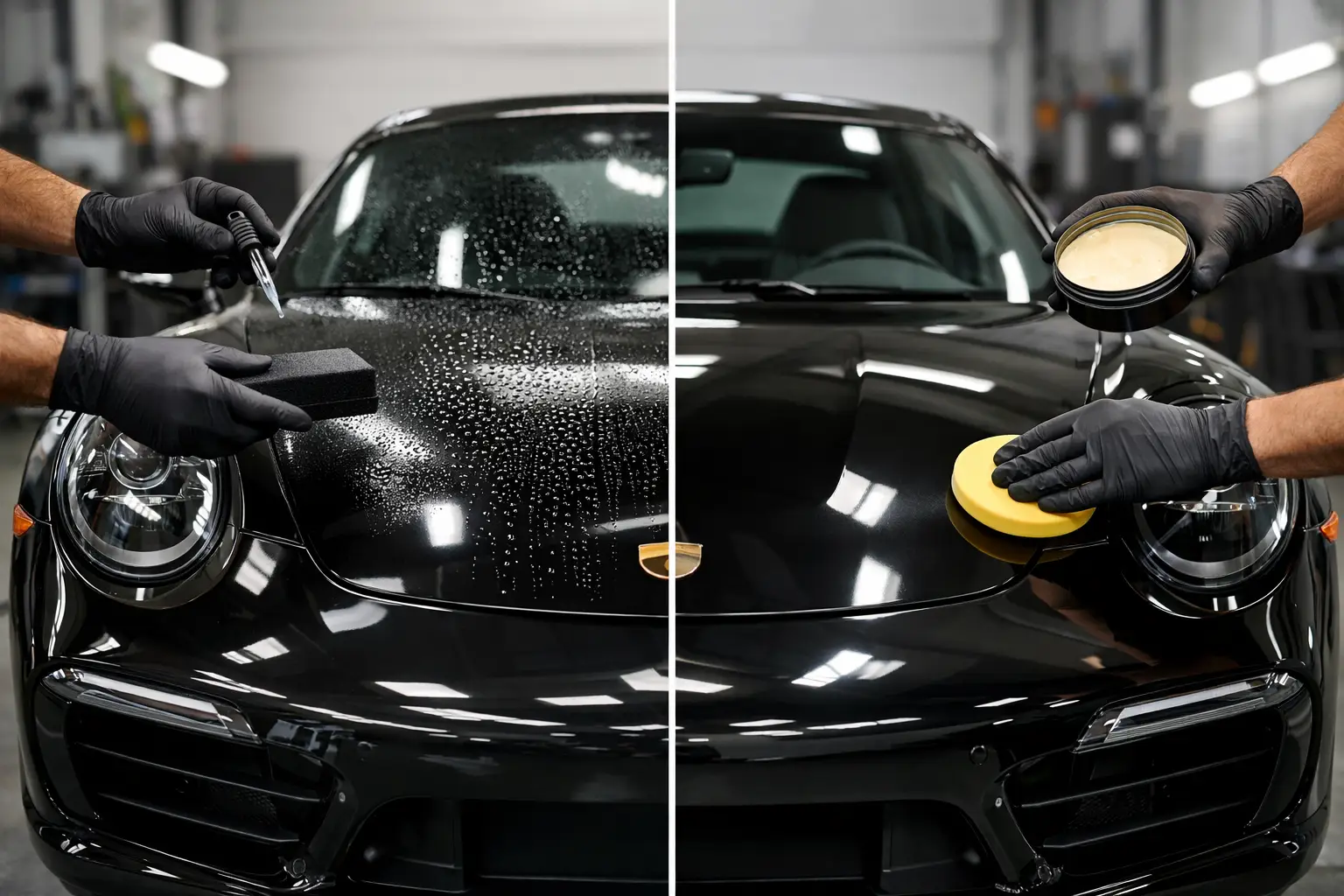
A freshly detailed vehicle can look incredible after either service, but the difference between ceramic coating vs wax becomes obvious once Oklahoma sun, sudden rain, road grime, and regular washing enter the picture. Wax is a familiar way to add shine. Ceramic coating is a longer-term protection system designed for owners who want that finish to hold up between details.
The better choice is not always the most expensive one. It depends on how you use your vehicle, how long you plan to keep it, the condition of the paint, and how much maintenance you are willing to handle. For many Edmond and Oklahoma City drivers, the decision comes down to whether they need a temporary cosmetic boost or durable protection that supports long-term value.
Ceramic Coating vs Wax: The Core Difference
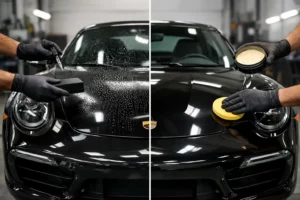
Car wax is a sacrificial protective layer applied over the clear coat. Traditional carnauba waxes create a warm, rich glow, while synthetic sealants often offer a sharper reflective look and somewhat longer protection. Both can improve water beading, make washing easier, and add noticeable gloss when applied to properly prepared paint.
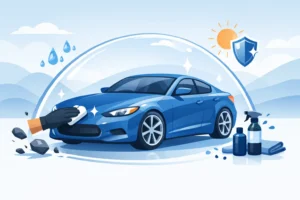
A ceramic coating uses a liquid polymer that chemically bonds with the vehicle’s clear coat. Once cured, it creates a durable, hydrophobic protective layer that resists UV exposure, environmental contamination, water spotting, and light wash-induced marring better than wax alone. It is not a force field, and it does not make paint invincible, but it is built to stay in place far longer.
That durability changes the ownership experience. Rather than reapplying protection every few weeks or months, a professionally installed coating can provide years of protection when it is properly maintained.
Shine: Warm Gloss vs. Crisp, Lasting Depth
Wax has earned its reputation for appearance. A quality carnauba wax can give paint a deep, warm glow that many enthusiasts enjoy, especially on darker colors and classic vehicles. For a weekend car that is frequently hand-washed and detailed, wax can be a satisfying part of the routine.
Ceramic coating delivers a different kind of visual result. It enhances clarity, depth, and reflectivity while helping the paint stay cleaner between washes. Because the coating remains on the surface longer, that polished look does not disappear after a few rainstorms, a hot summer week, or repeated washes.
Neither option can correct defects already in the paint. Swirl marks, oxidation, scratches, and water-spot etching need to be addressed through proper paint correction before protection is applied. Coating over flawed paint may lock in protection, but it also locks in the defects you can already see.
Durability Is Where Ceramic Coating Pulls Ahead
Wax is temporary by design. Depending on the product, weather, washing habits, and where the vehicle is parked, it may last only a few weeks to a few months. Oklahoma heat and UV exposure can shorten that timeline, particularly for vehicles that sit outside every day.
Ceramic coating is designed for long-term performance. Professional-grade coatings can last several years, with longevity depending on the product, preparation, installation quality, and maintenance. The coating’s chemical resistance and water-repelling properties help reduce how strongly dirt, pollen, bird droppings, tree sap, and road film adhere to the surface.
This does not mean contaminants can be ignored. Bird droppings, bug residue, and mineral-heavy water can still damage a coated vehicle if left in place. The advantage is that cleaning is typically faster, and the paint has an added layer of defense against the elements.
What Ceramic Coating Will Not Do
One of the most common misunderstandings is that ceramic coating prevents all scratches and chips. It does not. A coating can offer resistance to minor wash marring and light surface abrasion, but it cannot reliably stop rock chips, deep scratches, door dings, or collision damage.
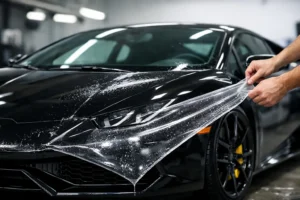
For high-impact areas such as the front bumper, hood, fenders, mirror caps, rocker panels, and behind the wheels, paint protection film is the stronger choice. PPF is a physical urethane film that absorbs the impact of road debris far better than a liquid coating. Many owners choose both: paint protection film where rock chips are most likely, then ceramic coating over the remaining painted surfaces and, when appropriate, over the film itself.
That combination is especially practical for new trucks, luxury vehicles, sports cars, and daily drivers that spend significant time on highways around the OKC Metro.
Maintenance: Easier Does Not Mean Maintenance-Free
Wax requires regular attention. To maintain its appearance and water behavior, it needs to be reapplied on a schedule. For owners who enjoy detailing, that can be a benefit rather than a drawback. Wax is also generally less expensive upfront and easier to apply at home.
Ceramic coating reduces maintenance, but it does not eliminate it. A coated vehicle still needs routine washing with appropriate products, soft wash media, and proper drying techniques. Automatic brushes, harsh chemicals, and neglect can dull the finish and compromise the coating’s performance over time.
The practical advantage is that coated paint usually releases dirt more easily. Water beads and sheets away more effectively, drying takes less effort, and the vehicle can retain a cleaner, glossier appearance between washes. For a busy commuter or a driver who wants a well-kept vehicle without constant reapplication, that difference matters.
Cost: Upfront Price vs. Long-Term Value
Wax is the lower-cost option. A professional wax service or quality DIY product can make a vehicle look dramatically better for a modest investment. It is a sensible choice for a leased vehicle nearing return, a vehicle being prepared for sale, or an owner who prefers frequent detailing.
Ceramic coating costs more because proper installation involves much more than applying a bottle of product. The vehicle must be thoroughly decontaminated, inspected, and often corrected to remove paint defects before the coating is installed. This preparation determines how good the finished vehicle looks and how well the coating performs.
For owners keeping a vehicle for years, ceramic coating can be a stronger value. It helps preserve gloss, reduces the effort required to maintain the finish, and supports the kind of exterior condition that buyers notice when it is time to trade or sell. The goal is not simply a shiny vehicle on installation day. It is a vehicle that continues to look cared for well into ownership.
Which Option Fits Your Vehicle?
Wax makes sense when you want an affordable shine enhancement, enjoy regular detailing, or need short-term protection. It remains a useful product, particularly for garage-kept hobby vehicles and owners who like the hands-on process.
Ceramic coating is the better fit when you want durable gloss, easier washing, UV protection, and a more consistent finish through changing seasons. It is particularly valuable for daily drivers, new vehicles, darker paint colors, and owners who park outdoors or drive frequently through rain, dust, bugs, and highway grime.
The right recommendation should be based on the actual vehicle, not a one-size-fits-all package. Paint condition, driving habits, storage, budget, and expectations all deserve an honest conversation before any protection is applied. At Superior Concepts, that attention to preparation and installation is what turns a premium coating into protection that looks as good as it performs.
A vehicle does not need to be exotic to deserve lasting care. Choose the protection that fits how you drive, then maintain it consistently. Your paint will show the difference every time the light hits it.