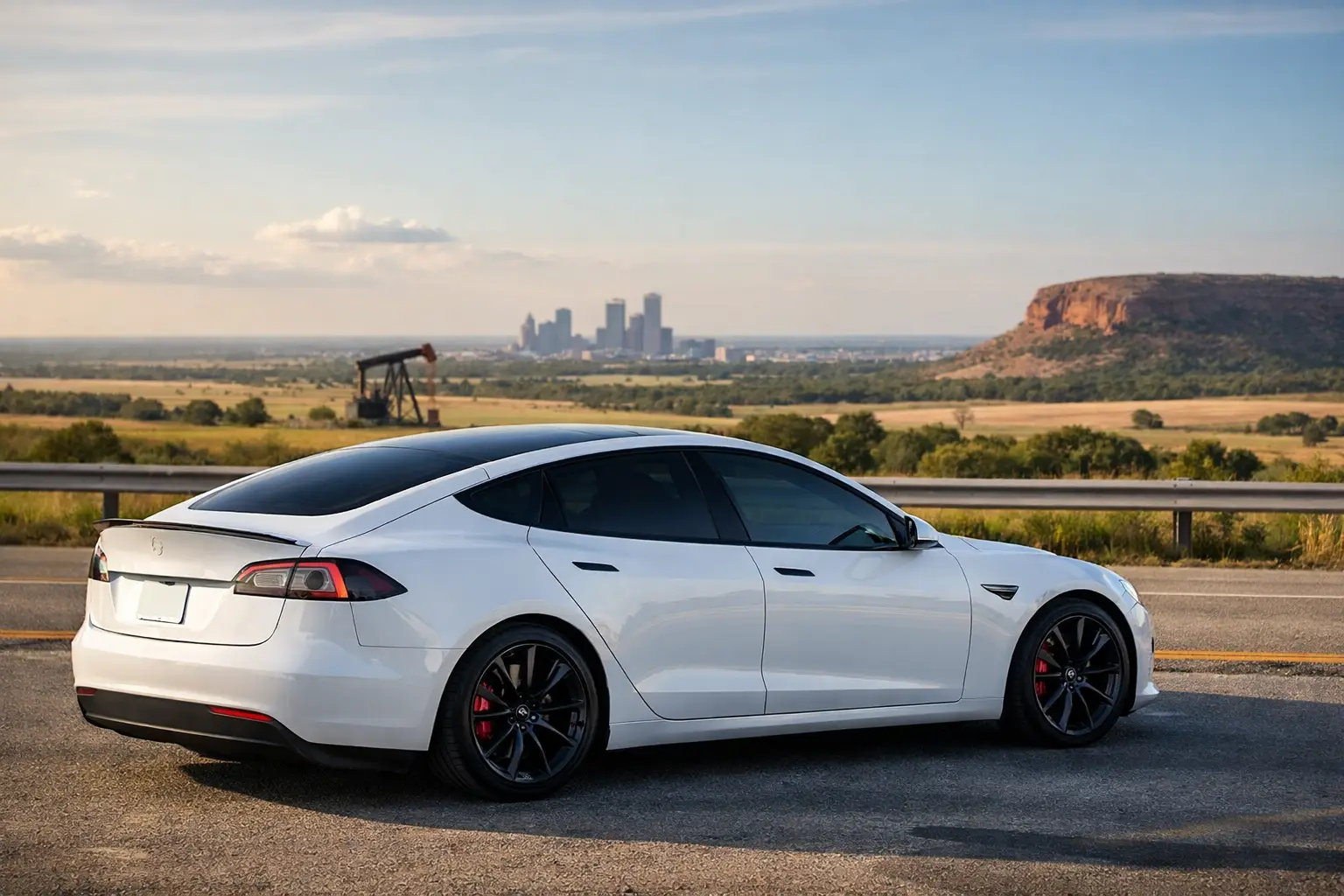
A new vehicle can lose its crisp, glossy finish faster than most owners expect. A single highway drive can leave rock chips on the bumper, while Oklahoma sun, wind, bugs, hard water, and automatic car washes gradually dull clear coat. Knowing how to protect car paint means addressing both sudden damage and the slow wear that steals a vehicle’s showroom appearance and resale value.
For drivers in Edmond and across the OKC Metro, the best plan is rarely one product or one appointment. It is a practical combination of smart maintenance and the right level of professional protection for how, where, and how often you drive.
Start With the Damage Your Vehicle Actually Faces
Paint is protected by a clear coat, but that clear coat is not invincible. It can be etched by bug splatter, contaminated by tree sap, scratched by improper washing, and worn down by repeated UV exposure. Road debris is different: gravel and loose material can strike with enough force to chip through the clear coat and paint entirely.
The front end of the vehicle usually takes the hardest hit. The bumper, hood, front fenders, mirror caps, headlights, rocker panels, and area behind the wheels are all high-risk zones. A daily commuter that spends time on I-35 may need more impact protection than a weekend vehicle kept mostly in a garage. On the other hand, a dark-colored vehicle may benefit especially from careful wash practices and a coating that makes swirl marks and water spotting easier to manage.
There is no one-size-fits-all package. The right choice depends on your paint condition, parking habits, mileage, road exposure, and how long you plan to keep the vehicle.
Wash Correctly Before Adding Protection
Many paint defects come from cleaning, not driving. Dust and road film are abrasive. When they are rubbed across the surface with a dry towel, worn wash mitt, or dirty automatic wash brush, they create fine scratches known as swirl marks. In direct sunlight, those marks can make otherwise clean paint look hazy.
Wash the vehicle only when the paint is cool to the touch, ideally in shade. Rinse thoroughly first so loose grit is not dragged over the finish. Use a clean, pH-balanced car shampoo, soft microfiber wash media, and separate tools for painted surfaces and dirty wheels. Dry with quality microfiber towels or filtered air rather than letting mineral-heavy water evaporate on the paint.
Touchless washes can be a better short-term choice than brush tunnels when you need convenience, but they are not a complete maintenance routine. Strong chemicals may strip waxes or leave traffic film behind. Brush-style automatic washes are more likely to introduce visible swirls, particularly on black, navy, and other dark finishes.
Just as important, remove bird droppings, bug residue, tree sap, and fuel spills promptly. They can become more difficult to remove with time and may stain or etch the clear coat. A small bottle of detail spray and clean microfiber towels in the vehicle can prevent a minor mess from becoming a lasting mark.
Use a Sacrificial Layer for Everyday Defense
Wax and paint sealants provide a temporary barrier between contaminants and paint. They add gloss, improve water beading, and make washing easier. For an owner who enjoys regular detailing and keeps the car garaged, a quality wax or sealant can still be a sensible, budget-friendly choice.
Their limitation is durability. Depending on the product, weather, wash methods, and driving conditions, protection may need to be refreshed every few months. They also do not stop rock chips or prevent physical scratching. Think of wax as routine upkeep, not armor.
A ceramic coating offers a longer-lasting, more durable chemical-resistance layer. Professionally installed coatings bond to the painted surface and create a slick finish that helps water, grime, bug residue, and environmental fallout release more easily during washing. The result is deeper gloss, less routine maintenance effort, and stronger resistance to UV exposure and oxidation.
Ceramic coating is often misunderstood as scratch-proof. It is not. It will not prevent a key scratch, door ding, or stone impact. It can help reduce minor wash marring and keep contaminants from bonding as aggressively, but it still needs proper washing and care. Its real strength is preserving gloss and making the vehicle easier to maintain over the long term.
How to Protect Car Paint From Rock Chips
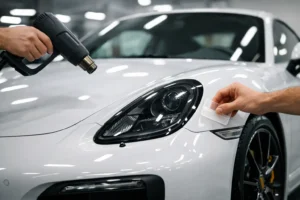
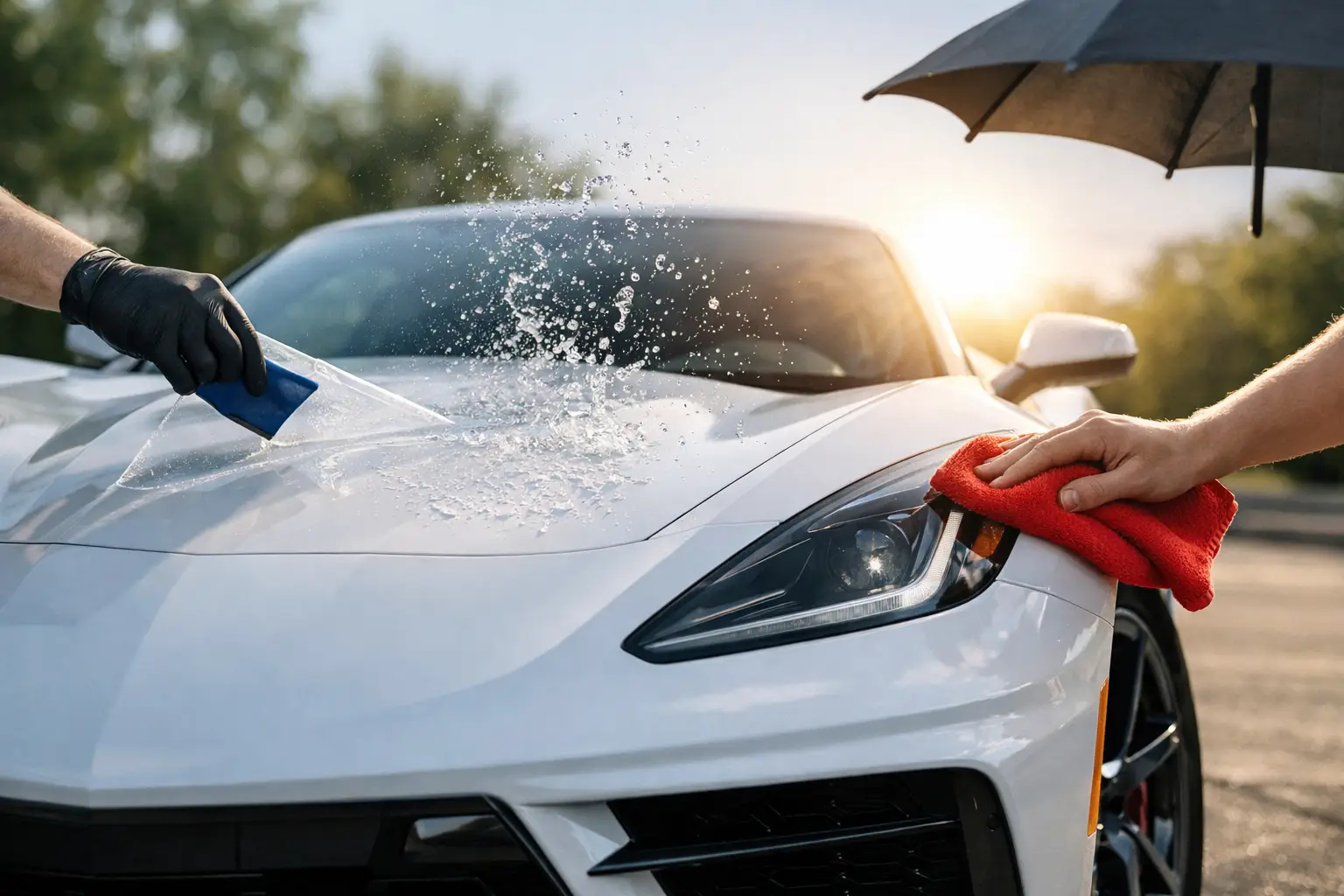
For high-impact areas, paint protection film is the most complete answer. PPF is a clear urethane film applied over vulnerable painted panels. It is designed to absorb the force of road debris and protect the paint underneath from chips, scuffs, and abrasion. Premium self-healing films can also minimize the appearance of light surface scratches when exposed to heat.
The difference is easy to understand: a ceramic coating protects against contaminants and simplifies maintenance, while paint protection film protects against physical impacts. They perform different jobs, which is why many owners choose both.
A partial front package is a strong option for drivers who want targeted protection for the bumper, leading edge of the hood, front fenders, and mirrors. Full-front coverage provides more complete defense across the entire hood and fenders, eliminating visible protection lines on those panels. Full-vehicle PPF is often selected for exotic, luxury, and performance vehicles, or by owners who want to preserve every painted surface for years.
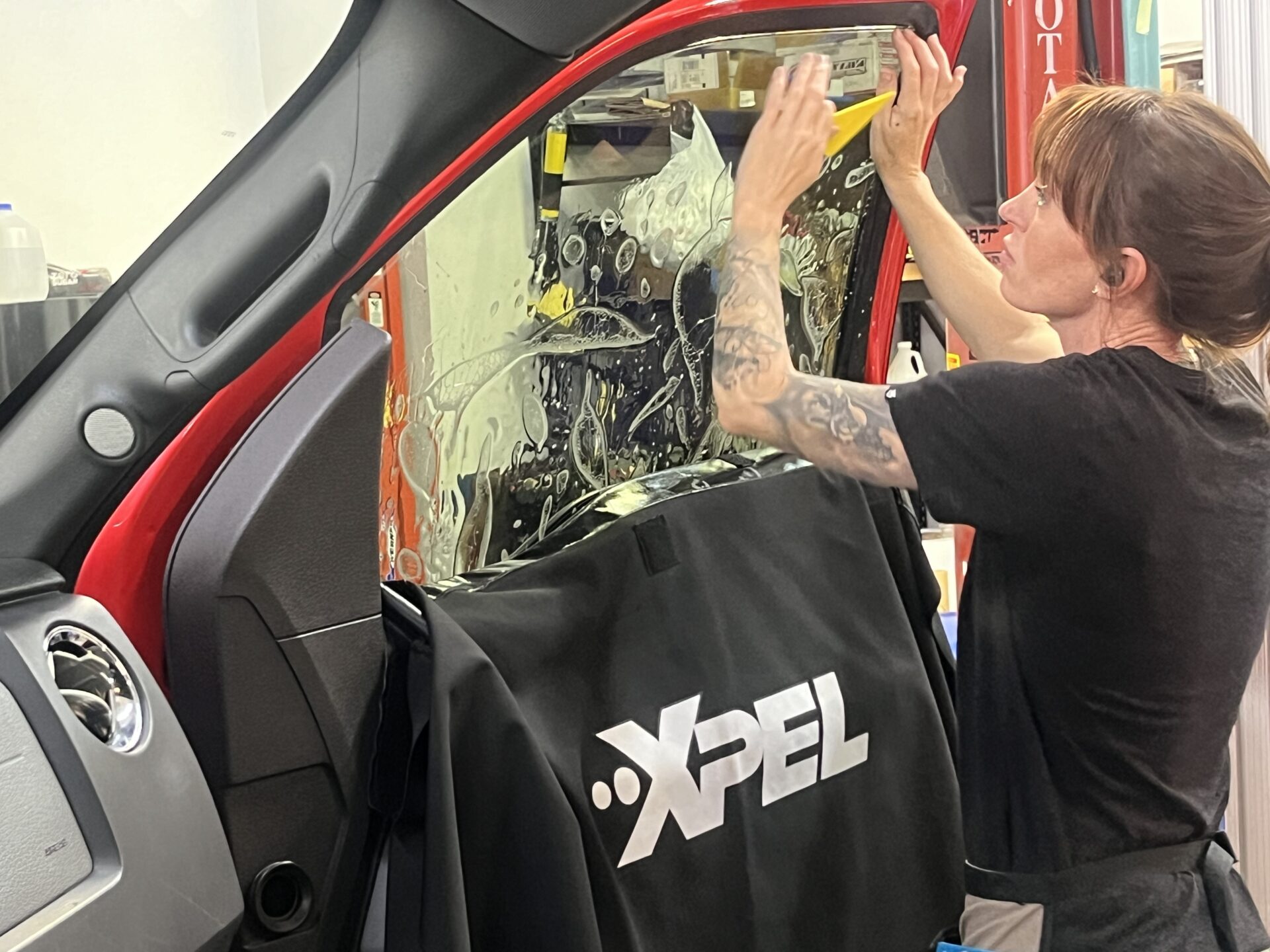
Installation quality matters as much as the film itself. Proper preparation, precise panel coverage, clean edges, and careful fitment determine whether the finished result looks nearly invisible and performs as intended. Paint correction may also be recommended before a coating or film installation so existing swirl marks and defects are not sealed beneath the new protection.
Protect the Areas Owners Often Miss
The hood and bumper deserve attention, but they are not the only panels exposed to damage. Rocker panels are constantly blasted by debris thrown from the front tires. Behind-the-wheel areas, lower doors, and rear quarter panels can show abrasion surprisingly quickly, especially on trucks, SUVs, and performance cars with wider tires.
Door edges and door cups are common scratch zones in everyday parking situations. Gloss-black trim, piano-black pillars, and painted interior trim also show fine marring quickly. A protection plan should account for the way you use the vehicle, not simply follow a standard menu.
For example, a family SUV that sees school drop-offs, road trips, and outdoor parking may benefit from front-end film, rocker protection, and a ceramic coating. A garage-kept sports car may call for full-front PPF and meticulous paint correction. A practical commuter may get excellent value from a coating paired with careful wash habits and focused film coverage on its most vulnerable panels.
Keep the Protection Working
Professional protection reduces maintenance demands, but it does not eliminate them. Continue washing with safe tools, avoid harsh brushes, and clean contaminants quickly. If your vehicle has ceramic coating, use coating-safe wash products and periodic maintenance treatments recommended by your installer. Avoid aggressive polishing unless it is necessary and performed with the coating or film in mind.
For PPF, inspect edges periodically and avoid picking at them. Film should be washed normally once it has fully cured, but harsh chemicals and abrasive pads are never a good idea. If a panel is damaged in an impact, the film may take the hit and can be replaced without repainting the original factory finish.
Parking choices matter, too. Covered parking limits UV exposure and contamination from trees and birds. When a garage is unavailable, regular washing and a quality protective layer become even more valuable. A car cover can help in some situations, but only when the vehicle is clean and the cover itself is clean. Trapped grit can scratch paint as the cover moves in the wind.
Choose Protection While the Paint Is Still Healthy
The best time to protect paint is before damage becomes visible. Once chips, oxidation, or deep scratches appear, correcting the finish may require polishing or refinishing before protection can be installed. That adds cost and, in the case of repainting, can affect the value of original factory paint.
Superior Concepts helps drivers choose protection based on their vehicle, driving habits, and ownership goals rather than pushing a generic package. Whether the priority is a polished daily driver, a protected new truck, or a carefully preserved performance vehicle, the right preparation and precise installation make the investment worthwhile.
Your vehicle does not need to be a show car to deserve lasting protection. Start with safe washing, address the panels that face the most abuse, and choose a protection system that fits the miles ahead. The result is paint that stays cleaner, glossier, and better prepared for every Oklahoma road.
Always feel free to reach out any time with any questions, advice is always free. Superior Concepts (405) 285-9000