
A faded dashboard can make an otherwise well-kept vehicle look years older than it is. In Oklahoma, intense sun, high summer temperatures, and long hours parked outdoors create the exact conditions that break down interior materials. Knowing how to prevent dashboard fading helps protect the look, comfort, and long-term value of your vehicle before the damage becomes permanent.
Dashboard fading is not simply a cosmetic issue. UV exposure dries out vinyl, plastic, leather, and soft-touch materials. Over time, the surface can lose its original color, develop a chalky appearance, feel brittle, or begin to crack near vents and along the windshield line. Once that deterioration is visible, restoring a factory-fresh finish is difficult. Prevention is the better investment.
Why dashboards fade in Oklahoma vehicles
Your windshield lets in a large amount of sunlight, and the dashboard sits directly in its path. Even when the outside temperature feels manageable, the interior of a parked car can become dramatically hotter. That trapped heat accelerates the effects of ultraviolet rays, especially on dark dashboards that absorb more solar energy.
The damage often starts subtly. Black trim may turn gray or hazy. Tan, gray, and colored dash materials can look washed out or uneven. Eventually, areas closest to the windshield may become dry to the touch. Drivers in Edmond, Oklahoma City, Norman, and surrounding areas often see this first on vehicles that spend the workday in uncovered parking lots.
Heat and UV rays are the main causes, but cleaning habits can make the problem worse. Harsh cleaners, alcohol-heavy products, and overly glossy dressings may strip protective oils from interior materials or leave behind residue that attracts more heat and dust. A dashboard does not need frequent aggressive treatment. It needs consistent, careful protection.
How to prevent dashboard fading before it starts
The most effective approach combines physical shade, UV reduction, gentle cleaning, and regular inspection. No single product can fully offset years of direct sun exposure, but these habits work together to slow wear substantially.
Use a windshield sunshade every time you park
A quality windshield sunshade is one of the simplest ways to reduce dashboard exposure. It blocks direct sunlight from reaching the dash while helping keep cabin temperatures more manageable. For daily drivers parked outside, this small step can make a meaningful difference over several Oklahoma summers.
Choose a sunshade that fits your windshield closely rather than a thin universal shade that leaves wide gaps around the edges. Reflective materials are generally most effective because they direct sunlight away instead of simply absorbing it. Fold it up and keep it accessible so using it becomes part of your parking routine.
A sunshade will not protect every interior surface, but it directly protects the area most likely to fade and crack. It also makes the vehicle more comfortable when you return, which gives you a practical reason to use it consistently.
Park strategically when possible
Shade matters, but the type of shade matters too. A covered garage or carport provides the strongest protection because it reduces both direct UV exposure and interior heat buildup. If covered parking is not available, look for shaded spaces during the hottest part of the day.
Parking beneath a tree can help in the short term, though it comes with trade-offs. Sap, pollen, bird droppings, and falling debris can affect paint and glass. When possible, a covered structure is preferable. If you park outdoors at work, combining a sunshade with a tinted windshield strip or professionally installed side and rear window tint offers a better daily defense.
Even changing the direction you park can help. If the sun is low in the morning or afternoon, position the vehicle so the dash is not receiving direct sunlight through the windshield for hours at a time.
Choose professional window tint for UV and heat control
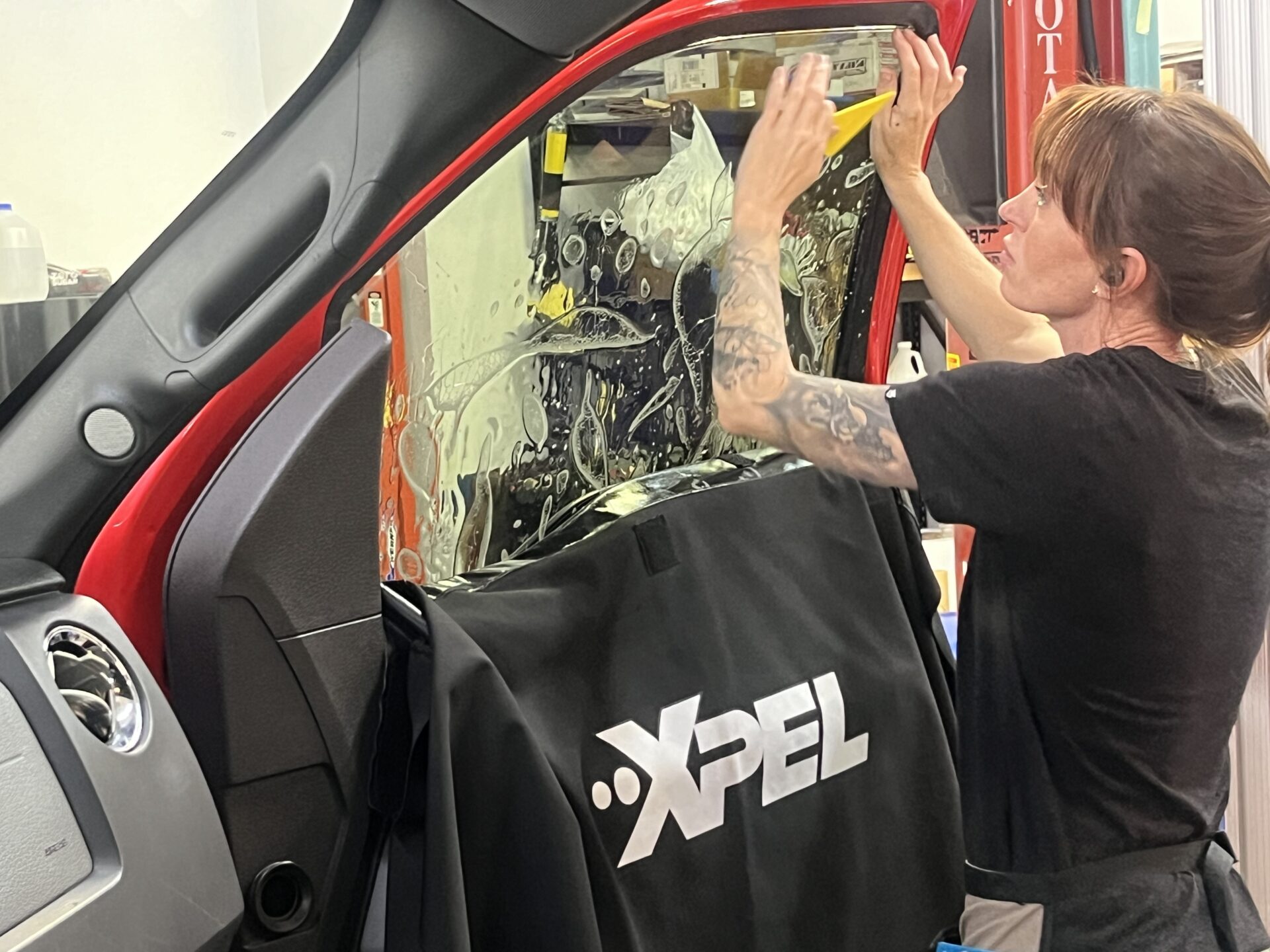
Professional window tinting does more than improve privacy or give a vehicle a cleaner appearance. Quality window film can reject a significant amount of solar energy and block the ultraviolet rays that contribute to fading throughout the cabin.
Side and rear window tint protects more than the dashboard. It also helps preserve door panels, seat materials, trim pieces, and electronics exposed to sunlight from the sides of the vehicle. The heat reduction can make daily driving more comfortable and reduce the strain on your air conditioning system during the hottest months.
The right film depends on your vehicle, driving habits, desired appearance, and Oklahoma tint regulations. Ceramic window film is often a strong choice for owners who want meaningful heat rejection without relying only on a very dark shade. It costs more than entry-level dyed film, but the improved heat performance and long-term clarity can justify the investment for vehicles that spend significant time outdoors.
A professionally installed film also matters. Clean edges, proper fitment, and quality materials help ensure the tint looks right and performs as intended for years.
Clean the dashboard without drying it out
Interior care products should protect the surface, not leave it slippery, greasy, or artificially shiny. That high-gloss look may seem appealing at first, but it can create windshield glare and attract dust. More importantly, some low-quality dressings contain ingredients that are not ideal for repeated use on sensitive interior materials.
Use a soft microfiber towel and a cleaner made specifically for automotive interiors. Spray the towel lightly instead of saturating the dashboard, then wipe gently. For textured surfaces and seams, a soft detailing brush can lift dust without scrubbing aggressively.
After cleaning, apply a non-greasy interior protectant with UV inhibitors if the material calls for it. Follow the product instructions, use a light coat, and buff away excess. The goal is a natural, even finish that does not reflect into the windshield.
Avoid household cleaners, bleach, strong degreasers, and products not labeled for automotive interior use. These can discolor materials, weaken protective surface layers, or leave streaks that are difficult to remove. If you are unsure what is safe for a leather-wrapped dash, suede-like material, gloss trim, or a digital display, use the manufacturer’s care guidance or ask a professional detailer before applying anything.
Do not overlook the windshield
A clean windshield improves visibility, but it also affects dashboard care. Dust and film on the inside of the windshield can make you reach for stronger cleaners or scrub near the dash, increasing the chance of overspray and residue on delicate materials.
Use an automotive glass cleaner and a clean microfiber towel, applying the product to the towel rather than spraying heavily across the glass near the dashboard. This helps avoid cleaner settling into vents, seams, speaker grilles, or textured trim.
If your windshield has existing chips or damage, repair it promptly. A clear, well-maintained windshield works better with a sunshade and supports a cleaner, more polished interior overall.
Watch for early signs of fading
Dashboard fading is easier to slow than to reverse. Check the dash periodically, especially near the base of the windshield and around defroster vents. Look for uneven color, whitening, dry patches, fine cracks, or a surface that feels rougher than it used to.
When you notice early changes, increase your protection habits rather than trying to cover the issue with a heavy dressing. Use the sunshade every day, keep the vehicle out of direct sun where practical, and make sure your window tint is still in good condition. Older or damaged film may not perform as effectively and can detract from the appearance of the vehicle.
For newer vehicles, start these habits immediately. Factory interiors are at their best when they are new, clean, and properly conditioned. Protecting that original condition helps the cabin continue to match the quality of the exterior, especially if you are investing in paint protection, ceramic coating, or other appearance upgrades.
Interior protection supports resale value
When it is time to trade in or sell a vehicle, buyers notice the interior quickly. A clean, dark, even dashboard suggests the vehicle has been cared for. A faded or cracked dash can create the opposite impression, even if the mechanical condition is excellent.
This is especially true for luxury vehicles, performance cars, trucks, and newer daily drivers where buyers expect premium materials to remain in good shape. Maintaining the interior does not guarantee a certain resale value, but it supports a stronger overall presentation and can help avoid the expense of cosmetic restoration later.
At Superior Concepts, vehicle protection is approached as a long-term decision, not a quick cosmetic fix. Professional window tint can be a smart part of that plan, pairing heat and UV control with a refined appearance that fits the vehicle.
The best time to protect your dashboard is before the Oklahoma sun leaves its mark. Keep a fitted sunshade in the vehicle, use interior-safe products, and consider quality window tint if your car regularly faces long hours outdoors. Those small choices help your cabin stay cooler, cleaner, and closer to showroom condition every time you get behind the wheel.