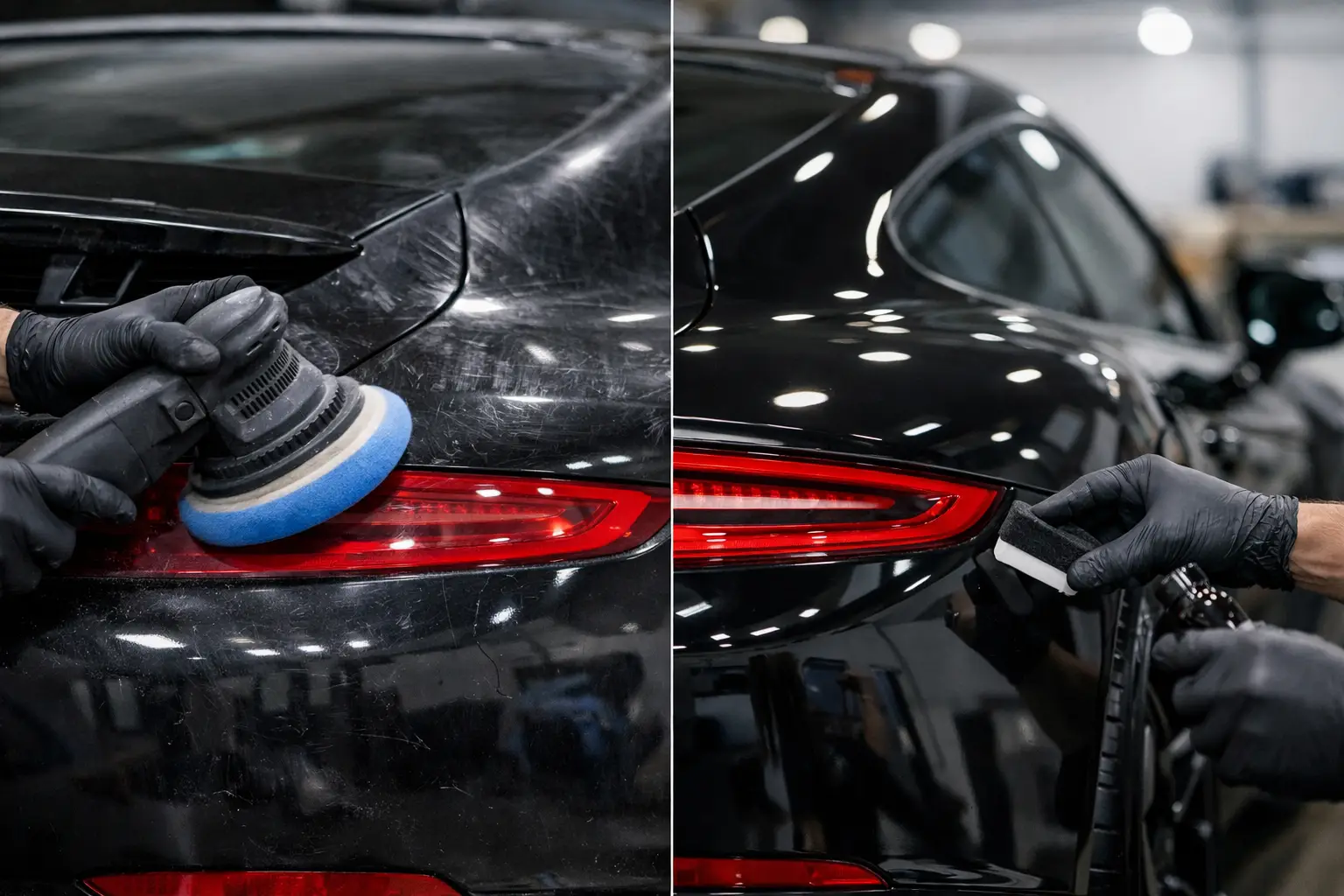
A ceramic coating can make paint look exceptionally glossy, but it cannot erase the defects already sitting in the clear coat. That is why paint correction before ceramic coating is often the difference between a vehicle that looks merely clean and one that looks properly refined under Oklahoma sunlight, parking lot lights, and close inspection.
For owners in Edmond and the greater OKC Metro area, this step is especially valuable. Dust, windblown grit, road film, automatic car washes, UV exposure, and everyday driving all leave their mark. Even a newer vehicle can arrive with light swirls, dealer-installed scratches, water-spot etching, or haze that becomes much more noticeable once a coating adds gloss and clarity. We advise customers buying a new car that plan to have it coated to request the dealership no wash the exterior of the car at all. Many use brush washes on the car when it arrives, often creating paint damage that must be corrected prior to coating.
What Paint Correction Actually Does
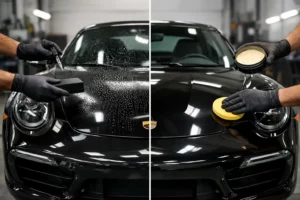
Paint correction is the professional process of leveling or reducing visible defects in a vehicle’s clear coat through controlled machine polishing. Depending on the condition of the paint, that may mean a single-step polish to improve gloss or a more involved multi-stage correction to address deeper swirl marks, scratches, oxidation, and dullness.
The goal is not to remove excessive clear coat chasing perfection at any cost. Quality correction is about making informed decisions for the vehicle in front of us. A well-maintained newer car may only need a light finishing polish, while a daily driver that has seen years of tunnel washes may need more extensive refinement before protection is applied.
When the paint is corrected properly, it reflects light more evenly. Metallic flake appears cleaner, darker colors gain depth, and the finish takes on the crisp, wet-looking gloss most owners expect from a premium ceramic coating.
Why Paint Correction Before Ceramic Coating Is Worth It
Ceramic coatings are designed to bond to the vehicle’s exterior surfaces and provide durable chemical resistance, water behavior, UV protection, and easier maintenance. They enhance the appearance of the surface beneath them. They do not fill or permanently remove scratches, swirls, etched water spots, or other paint defects.
In fact, a coating can make neglected paint imperfections stand out more. The added clarity and gloss act like a spotlight on the finish. If a black truck, dark blue SUV, or performance car has visible wash marring before coating, those marks may look even more apparent once the vehicle is freshly coated and pulled into the sun.
Correcting the paint first gives the coating its best foundation. It also means you are preserving the look you want to protect. Rather than sealing in years of light damage, you begin with a finish that has been carefully cleaned, refined, and prepared for long-term defense.
There is a value consideration as well. A ceramic coating is an investment in appearance and preservation. Applying it over paint that has not been evaluated or polished may cost less up front, but it can leave owners disappointed when the finished vehicle does not have the clarity they expected. Proper preparation makes the final result feel complete.
Not All Ceramic Coatings Are The Same
In the world we live in, it’s common to chase the latest “fad” Over the past 15 years at Superior Concepts, we have seen them come and go, watched the copycats, and seen the failures. While once a protected product, requiring specialized training, and manufacture certifications – now various ceramic products are available everywhere. Every detail supply truck has shelves of products that they will sell to anyone. All too often we see vehicles in our shop that have failed coatings. Many times, it’s from using inferior products. Sometimes it is from improper application. Most often its low price point coatings offered by generic “detail” shops. Our products are real world tested and stand up to the harsh environment that Oklahoma weather subjects our vehicles to. The biggest red flag when shopping a ceramic coating is when the provider says, “we offer a “X” year coating” or “we have a 3-year, 5-year, 7-year coating” Manufactures estimate time based off of laboratory tests that can’t take into account the climate you live in, types of washes, how the vehicle is used, etc. We prefer to explain to customers what can shorten the lifespan of the coating, and what can insure it lasts for many years.
The Defects Most Often Addressed Before Coating
Not every imperfection can or should be removed. Paint thickness, panel history, color, age, and the depth of each defect all matter. Still, professional paint correction can significantly improve many common issues, including:
- Rail dust, small iron particles from shipping containers
- Fine swirl marks and wash-induced marring
- Light scratches around door handles, trunk openings, and loading areas
- Dullness, haze, and mild oxidation
- Water-spot etching that has marked the clear coat
- Buffer trails or inconsistent polishing from prior work
- Light scuffs and paint transfer that have not penetrated the finish
Deeper scratches that catch a fingernail, rock chips, previous repainting concerns, and clear-coat failure require a different conversation. Polishing cannot safely repair every defect, and an honest recommendation may include touch-up, paintwork, paint protection film, or simply preserving the vehicle without aggressively chasing damage that is too deep to correct.
How the Process Protects the Finish
Quality paint correction is not just a matter of running a polisher over every panel. It starts with inspection. The paint needs to be evaluated under proper lighting so swirls, scratches, texture, and prior repair work can be identified. The vehicle is then carefully washed and decontaminated to remove embedded fallout, road grime, and bonded contaminants that can interfere with polishing or coating adhesion.
From there, the correction approach is tailored to the paint. Different vehicles use different clear-coat systems, and some finishes are softer or harder than others. A professional tests a small area first, selecting the least aggressive combination of pads, polish, machine movement, and working time needed to create meaningful improvement.
This measured process matters because clear coat is finite. The best work balances visual improvement with long-term paint preservation. It is craftsmanship, not a quick cosmetic shortcut.
After correction, the surface is inspected again, refined as needed, and thoroughly prepared so the ceramic coating can bond correctly. That preparation helps ensure the finish is clean and free of polishing oils or residue that could affect the coating’s performance.
Does Every Vehicle Need Full Paint Correction?
No. The right level of correction depends on the vehicle and the owner’s expectations. A brand-new vehicle may look flawless at delivery but still have light defects from transport, dealership washing, or factory handling. It may benefit from a finishing polish before coating, even if it does not need a heavy correction process.
A well-kept daily driver may need a one-step correction to noticeably improve gloss and reduce visible swirls. A luxury vehicle, collector car, or dark-colored performance vehicle may warrant multi-stage work when the owner wants a more dramatic visual transformation.
There are also situations where a lighter approach makes sense. If a vehicle has thin paint, an older repaint, or defects that are too deep to safely remove, preserving paint thickness is the priority. A professional shop should explain what can realistically be improved, what should remain untouched, and why. That transparency protects both the vehicle and the customer’s investment.
Ceramic Coating and Paint Protection Film Work Better Together
Paint correction improves appearance. Ceramic coating helps preserve that refined finish against UV exposure, contaminants, bird droppings, bug residue, and routine washing. But neither is a substitute for impact protection where road debris is a real concern.
For vehicles driven regularly on Oklahoma highways, paint protection film is often the better solution for high-impact areas such as the front bumper, hood, fenders, mirrors, and rocker panels. PPF is designed to absorb the damage from many rock chips and road hazards that would otherwise mark the paint. Ceramic coating can then be applied to protected and unprotected painted surfaces to support easier cleaning and a consistently glossy appearance.
The best package depends on how and where you drive. A weekend sports car, a new luxury SUV, and a commuter truck may all need different levels of correction and protection. The right plan should fit the vehicle’s condition, intended use, and ownership goals rather than forcing every car into the same package.
Keeping Corrected and Coated Paint Looking Its Best
Once paint has been corrected and ceramic coated, maintenance matters. The coating makes washing easier, but it does not make the vehicle maintenance-free. Use a gentle hand-wash method, clean microfiber towels, and quality drying tools to reduce the chance of adding new swirls.
Avoid abrasive brush washes whenever possible. They may be convenient, but repeated contact from contaminated brushes can gradually reintroduce the same marring that paint correction removed. Promptly rinse off bird droppings, bug splatter, tree sap, and mineral-heavy water spots as well, especially during hot weather.
A professional inspection and maintenance plan can help keep the coating performing as intended and catch issues before they become more difficult to correct. At Superior Concepts, the focus is on pairing the right preparation with the right protection so the finish holds up beautifully long after it leaves the shop.
Before choosing a ceramic coating package, ask for a clear assessment of your paint. Starting with a properly corrected surface gives your vehicle the depth, clarity, and protection-worthy finish you will be proud to see every time you walk up to it.